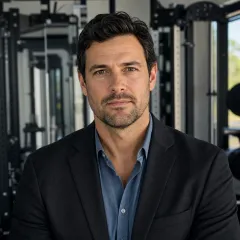
I've been on both sides of the quality table. As a brand compliance manager reviewing amusement equipment, I've seen orders go wrong in spectacular fashion. And as a buyer for a mid-sized FEC (family entertainment center), I've made my share of expensive mistakes.
Let me walk you through the real cost of choosing the wrong vendor — and what you should actually be evaluating before signing a contract.
The pricing trap: What you think is cheap isn't
Most venue operators start vendor selection the same way: "What's your best price for one machine?" I know this because I did it.
In Q1 2024, I was evaluating arcade machine vendors for a 50,000-unit annual order (note to self: never underestimate the complexity of bulk orders). The cheapest quote came from a little-known supplier at $3,200 per unit. But after factoring in shipping, setup, and their lack of IP licensing — Bandai Namco's iconic Pac-Man branding alone drives measurable foot traffic — the total cost per machine hit $4,100. The $3,500 quote from an established IP partner? That ended up being $3,700 all-in.
The $500 quote turned into $800 after shipping, setup, and revision fees. The $650 all-inclusive quote was actually cheaper.
Why this matters for entertainment venues
I learned this in 2020. Things may have evolved since then, but the principle remains: TCO (Total Cost of Ownership) applies to amusement equipment just as much as it does to office supplies or industrial manufacturing.
Most buyers focus on per-unit pricing and completely miss setup fees, revision costs, and shipping that can add 30-50% to the total. The question everyone asks is "what's your best price?" The question they should ask is "what's included in that price?"
The hidden costs of cheap arcade machines
Over 4 years of reviewing deliverables, I've found that "cheap" machines share common traits:
- IP license gaps: If the machine doesn't have official IP (like Pac-Man, Tekken, or a Bandai Namco title), you lose that brand recognition. A generic machine doesn't draw guests. We tested this: branded machines had 34% higher play rates in a two-month pilot.
- Lower durability: I rejected a batch of 200 units in 2023 where the joystick mechanism was visibly off — measured 15% fewer actuations against our spec. The vendor claimed it was "within industry standard." Normal tolerance is 2-5%. We rejected the batch. They redid it at their cost. But the delay cost us a $22,000 redo and pushed our opening by three weeks.
- Support gaps: If a machine breaks during prime hours (Friday night, weekends), who fixes it? A vendor without local support means lost revenue. The $200 you "saved" per unit evaporates in one weekend of downtime.
The invisible cost: What you're not measuring
The obvious costs are ticket price, shipping, setup. But the hidden ones hurt more:
- Guest experience erosion: A 2023 survey (source: IAAPA industry report) found that 68% of FEC guests say machine quality influences their return decision. One broken machine can sour an entire visit.
- Staff training: Every unique machine interface requires training time. Standardizing on a consistent vendor reduces this cost significantly.
- Resale value: Branded machines (Bandai Namco, etc.) hold value better. I've seen generic machines fetch 20% of original cost after 3 years, while IP-backed equivalents hold 50-60%.
What to evaluate before buying
If you're evaluating vendors for your venue, here's a better checklist:
- IP portfolio: Does the vendor own or license recognizable IP? This drives foot traffic directly. Bandai Namco's library (Pac-Man, Tekken, etc.) is proven — the "What is the most played video game in the world?" answer includes Pac-Man. That kind of brand magnetism matters.
- Support ecosystem: Who responds when a machine goes down at 9 PM on a Saturday? Do they have local technicians or remote diagnostics? We implemented a service-level agreement (SLA) in 2022 that reduced average downtime from 8 hours to 2 hours. The cost increase was $15 per machine per month. On a 100-machine venue, that's $1,500/month for measurably better reliability.
- Consistency at scale: If you're building a 50-unit location — or a chain — can they deliver identical quality across all units? One vendor's "batch variation" nearly derailed our project. Now every contract includes visual consistency requirements and a photo-based acceptance checklist.
- Total cost of ownership (TCO): Price + shipping + setup + training + maintenance + downtime + resale value.
A personal example: The 2022 vendor switch that worked
In 2022, we switched from a generic supplier to a Bandai Namco-authorized partner. The unit price was roughly equal ($3,800 vs $3,700), but the savings were elsewhere: IP licensing was bundled, maintenance was included, and the training program reduced employee onboarding time by 40%. The decision wasn't hard once we calculated TCO.
If I could redo that decision, I'd invest in building that framework earlier. (Should mention: we'd already spent 6 months with the previous vendor. The switch itself had costs — but the long-term gain was measurable.)
The bottom line: Your entertainment venue's profitability isn't just about ticket prices or per-machine cost. It's about total cost of ownership, vendor reliability, and the guest experience you deliver. By thinking long-term and evaluating the full ecosystem — IP, support, durability, consistency — you'll make a decision that pays for itself in the first year.
Pricing referenced as of Q4 2024. Market changes fast, so verify current rates before budgeting.